4 Disaster Preparedness & Emergency Response Plan
Emergency Preparedness/Response Procedures
The UM’s evacuation plan is current as of 2024 (Figure 4.1).
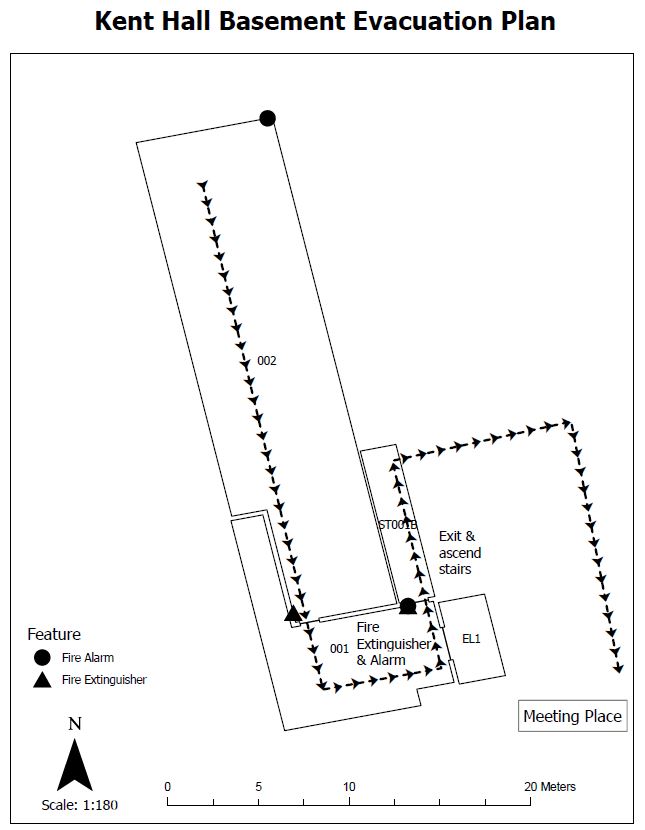
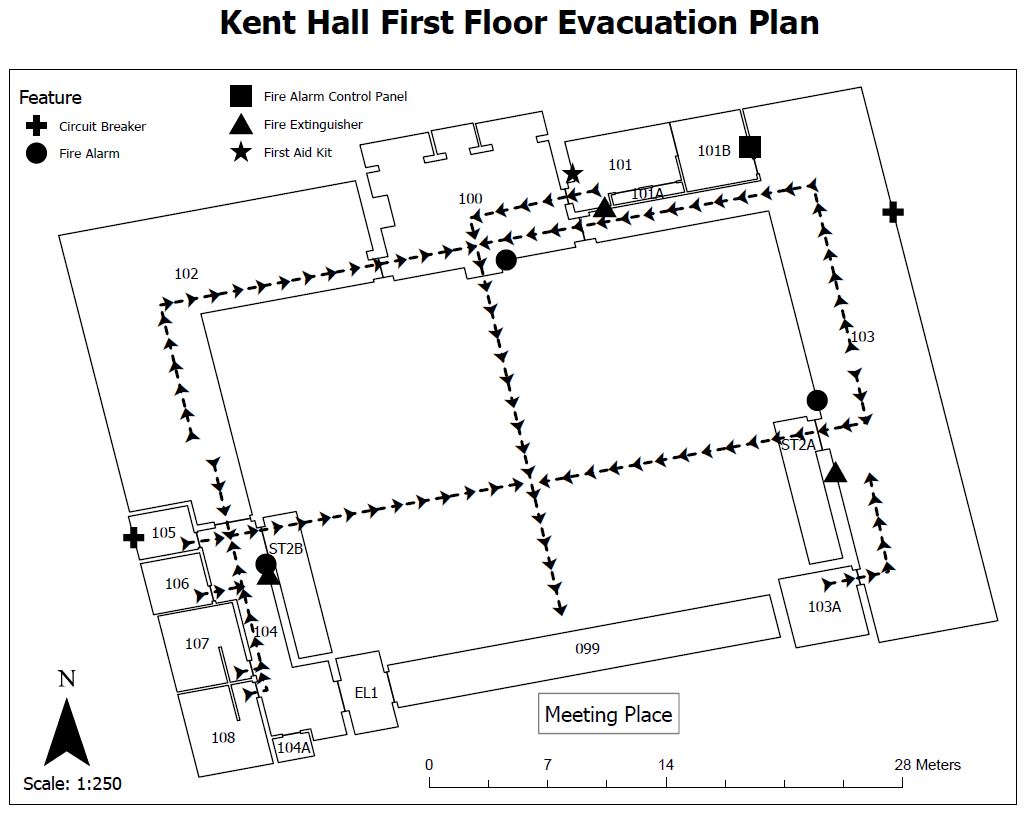
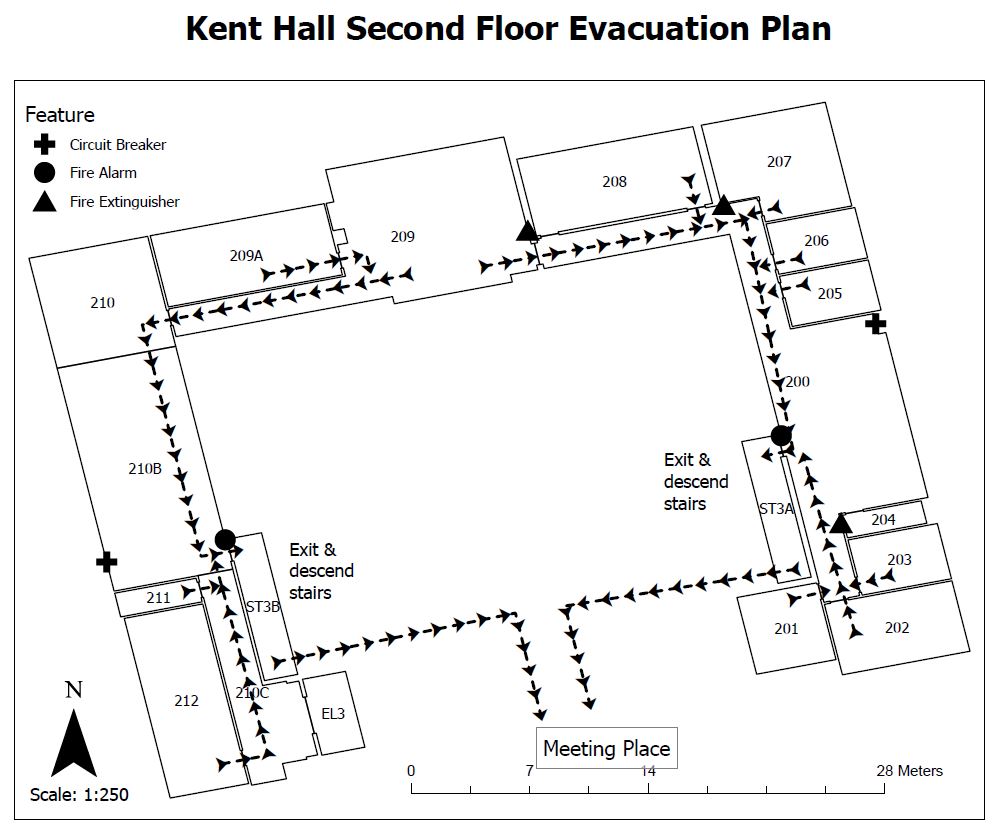
General Guidelines
Accidental Damage
Bomb Threat
Civil Disturbance
Earthquake
Environmental Emergencies
Fire
The Director and Curator are authorized to use portable fire extinguishers to fight fires. All other employees, students, or volunteers must evacuate the museum immediately when the fire alarm sounds. Each year, employees authorized to use portable fire extinguishers must be trained to use the devices. Fire extinguishers in the museum must be inspected, tested, and maintained 29 CFR 1910.157(b)(2).
Flood (weather or internal plumbing)
Hazardous Materials
Hurricane
Mechanical Failure
Medical/Health Emergency
Mold
Neighboring Emergency
Pests
In both Kent and Wells Halls there is a high potential for pest infestations if left unchecked. Museum records indicate that in Kent Hall pest infestations, particularly dermistid betels, were a problem in the past. Little is known about the pest history in Wells Hall. However, in Wells Hall there is presently a great deal of debris, and insect pests have been observed on more than one occasion.
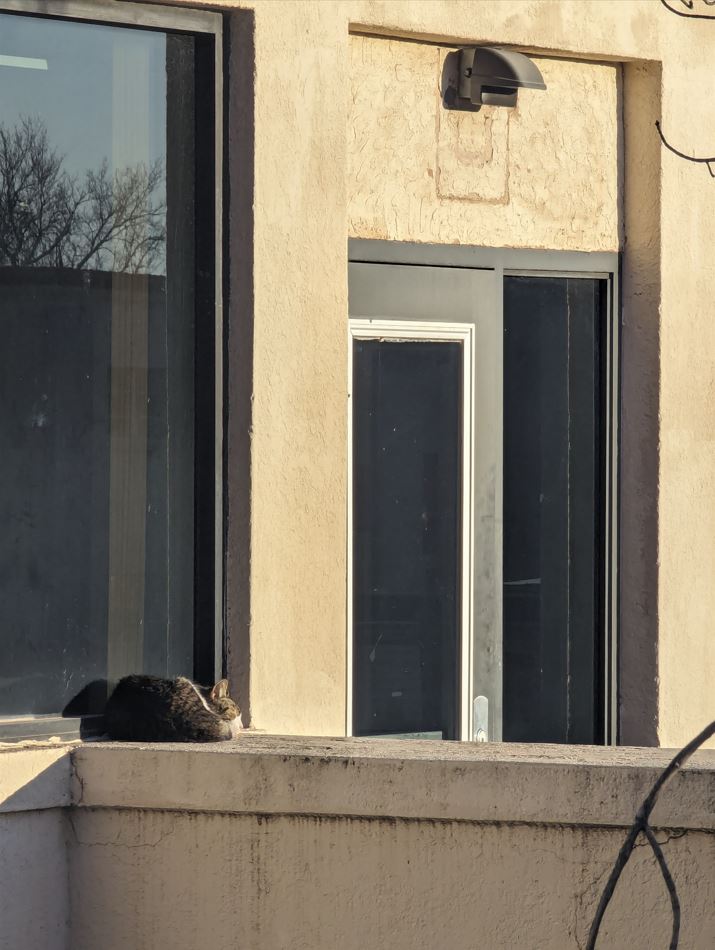
Museum pests include insects, vermin, as well as mold and microbes; all of these are agents of deterioration (NPS 2019, 3:2). Of these pests, rodents are perhaps the greatest potential for harm, but “the museum cat can be a cheap and simple method of reducing rodent problems” (Ambrose and Paine 2006, 176). There is a UM cat, and there are no signs of rodents at KH Figure 4.2. Controlling insects is much more difficult, and they have been a greater issue for the UM. Pesticides are not recommended for museum collections because the chemicals may harm the objects (NPS 2019, 5:8). The National Park Service prescribes, and the UM seeks to follow, a program of Integrated Pest Management (IPM).
Elements of an IPM:
- Gather information about collections and kinds of pests likely to impact them. Information gathering should include interior and exterior conditions of the building and the condition of the building envelope.
- Identify information about pests that are likely to damage collections.
- Review IPM policies.
- Establish priorities to focus on. Eg. monitor all doors into the second floor or traps in collection areas that are near doors.
- Establish action thresholds. How many pests in collections are too many.
- Monitor objects, environmental conditions, and pests.
- Implement ecosystem approach to management and control of pests.
- Document monitoring and treatment.
- Work and coordinate with museum staff.
- Evaluate results and calibrate as needed.
IPM and museum housekeeping are intimately connected and should be done in concert (NPS 2019, 5:12).
Sticky traps are used in Kent Hall. Generally, traps are set near doorways and by HVAC systems.
Pandemic/Public Health Emergency
Power Loss/Energy Cutback
Security/Theft/Vandalism
Structural Failure
Terrorism
Tornado/Windstorm
Active Shooter/Assailant
Pipeline Incident
Emergency Salvage Procedures
This should include specific recovery actions for types of materials in the collection.